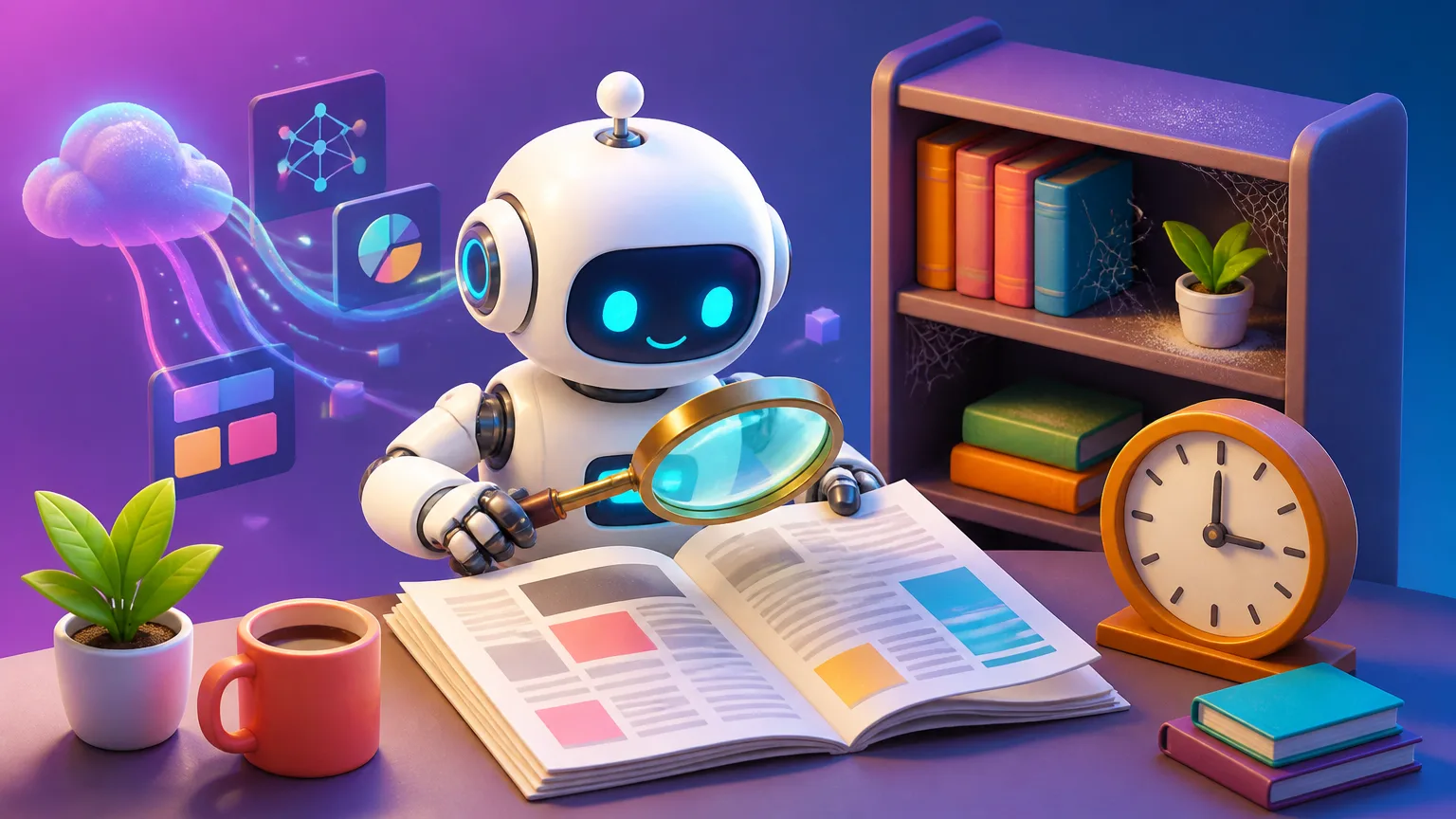
Large language models are brilliant, but they have a dirty secret: they are frozen in time. A model trained in 2023 knows nothing about a policy change made last Tuesday. It also cannot access your company’s private internal reports without leaking them into its training data. This is where Retrieval-Augmented Generation, or RAG, comes into play. It is a practical architecture that gives an LLM a reference library, allowing it to "look up" facts before it speaks.
The Core Problem: Hallucinations and Stale Knowledge
Standard LLMs generate text based on patterns learned during training. They do not have a database of facts they can query. When you ask about a specific document or a recent event, the model has two options: admit ignorance or make something up. Often, it chooses the latter. This is known as hallucination.
RAG solves this by splitting the process into two distinct phases. First, a retrieval system searches a knowledge base for relevant information. Second, the LLM uses that retrieved information as context to generate an answer. The model is not guessing anymore; it is reading from a source you control.
How the Retrieval Step Works
Before you can retrieve anything, you need a searchable index. This involves chunking and embedding.
- Chunking: You split your documents into smaller, digestible pieces, perhaps 200 to 500 words each. This is necessary because embedding entire books into a single vector loses nuance.
- Embedding: You pass each chunk through a separate embedding model. This model converts the text into a long list of numbers, known as a vector. The goal is that semantically similar sentences produce similar vectors.
- Vector Database: You store these vectors in a specialized database like Pinecone, Weaviate, or pgvector. This database is optimized for similarity searches.
When a user asks a question, you embed their query using the same embedding model. The database then finds the chunks whose vectors are closest to the query vector. These top results are your retrieved context.
The Augmented Generation Step
Now you have the raw materials. The magic happens in the prompt. You assemble a new prompt that includes the retrieved chunks alongside the original user question.
A simplified prompt template might look like this:
Context:
- [Chunk 1 from Report A]
- [Chunk 2 from Policy B]

Question:
[User's original query]

Answer based only on the context provided:
Notice the instruction at the end. This forces the LLM to ground its response in the provided context. It reduces hallucinations dramatically because the model has a "cheat sheet" to reference. It also allows you to cite sources. You can tell the LLM to include the source document name in its output, which builds trust with the end-user.
Why This Matters for Real Applications
RAG is not just a research toy. It is the backbone of many enterprise chatbots and internal search tools.
- Customer Support: A bot can access the latest product manuals and troubleshooting guides, providing accurate fixes without human intervention.
- Legal and Compliance: Law firms can query hundreds of thousands of case files to find precedents in seconds.
- Internal Knowledge Management: New employees can ask an AI about company policies, vacation procedures, or technical architecture and get answers grounded in official documents.
The biggest advantage is that you can update the knowledge base without retraining the model. If a policy changes, you simply delete the old chunk from the database and upload the new one. The LLM weights remain untouched, saving you thousands of dollars in compute costs.
A Simple Implementation Sketch
If you are a developer, the logic is straightforward. Here is a pseudocode example to illustrate the flow:
def answer_question(query):
    # 1. Embed the user query
    query_vector = embed(query)

    # 2. Search the vector database for similar chunks
    results = vector_db.search(query_vector, top_k=3)

    # 3. Build the prompt with the retrieved context
    context = "\n".join([r.text for r in results])
    prompt = f"Context:\n{context}\n\nQuestion:\n{query}\n\nAnswer:"

    # 4. Generate the final answer
    return llm.generate(prompt)
The Limitations to Watch For
RAG is powerful, but it is not perfect. The quality of the output depends entirely on the quality of the retrieval. If the embedding model fails to find the right chunk, the LLM will generate an answer based on irrelevant context. You also need to handle cases where the database returns no results at all. In that scenario, the best response is often "I don't know," rather than forcing the model to guess.
Another challenge is prompt bloat. If you stuff too many chunks into the context window, you overwhelm the model and increase latency. You must balance the amount of context with the complexity of the question. Good chunking strategies and re-ranking models can mitigate this, but they add complexity to the pipeline.
Despite these hurdles, RAG remains the most accessible way to give LLMs specific, current, and private knowledge. It bridges the gap between a generic AI model and your specific business needs, making the output verifiable and trustworthy.
Courses this relates to
Come and sit a class before you decide
Reading about it only gets you so far. Pick a day, sit in on a class that is already running, write some code, and talk to the students in it. Free, and nothing to pay afterwards unless you want to join.